
A Beginner's Guide to Box Stock Tamiya Mini 4WD Racing
Published
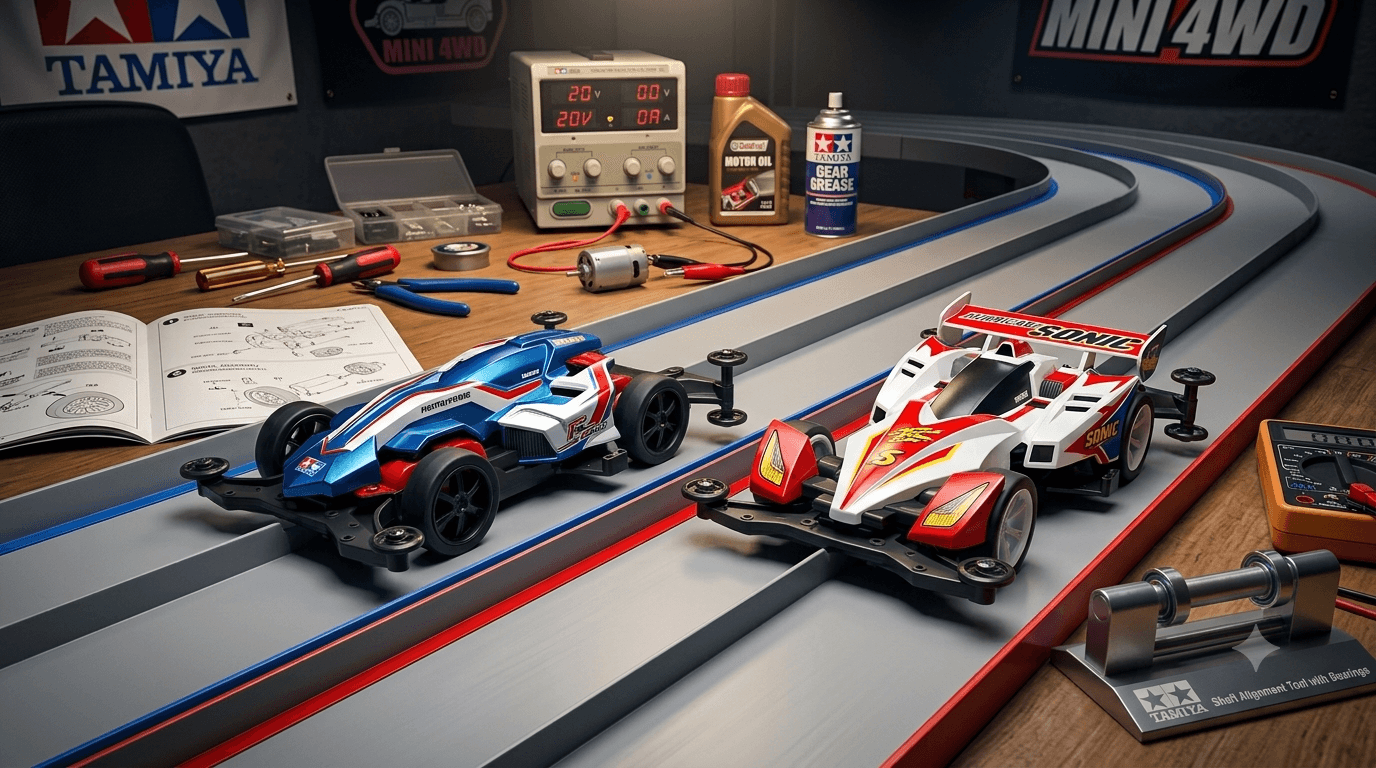
A Beginner's Guide to Box Stock Tamiya Mini 4WD Racing
Box Stock is the ultimate baseline class in Tamiya Mini 4WD. Because you are strictly limited to the parts included in a single kit box, victories aren't won by buying expensive carbon plates or ultra-fast dash motors—they are earned through careful kit selection, meticulous build quality, and precision tuning.
If you are getting ready to enter your first Box Stock race, here is your essential step-by-step guide to choosing the right kit, squeezing maximum performance out of stock parts, and properly breaking in your motor.
1. Selecting the Right Kit
Not all Box Stock kits are created equal. While every car follows the same basic rule set, certain kits come packaged with factory hardware that gives you an immediate competitive edge on track.
When shopping for a Box Stock contender, look for kits that include:
Polycarbonate (PC) Bodies: Clear polycarbonate shells are significantly lighter than standard ABS plastic cowls, lowering your car's center of gravity and overall weight.
Specialty Tires: Look for kits supplied with Super Hard or Low Friction tires, which help maintain momentum in technical corners and reduce bounce upon jump landings.
Carbon-Reinforced Wheels/Chassis: These offer increased rigidity, reducing energy loss from flex during high-speed runs.
Recommended Kit Examples:
Cyclone Magnum / Hurricane Sonic: Polycarbonate, highly balanced performers on robust chassis layouts.
Mach Frame (Fighting Korea Edition): A top-tier choice that comes pre-equipped with a lightweight cowl and low friction tire compound straight out of the box.
Note: The version 3 of this kit has a Torque Tuned Motor. The kit itself is still allowed but you will need to swap the motor with a stock motor.
2. Mastering the Basics of Assembly & Tuning
In Box Stock, you can't add aftermarket stabilization plates or ball bearings, so every fraction of a millimeter in alignment counts.
Follow the Manual to the Letter
Assemble every component exactly as shown in the Tamiya instruction manual.
Apply the included grease to gears, drive shafts, and counter-shafts precisely where indicated. Proper initial lubrication prevents power loss and prevents premature wear on plastic gears.
Wheel & Shaft Alignment
Crooked wheels or bent drive shafts lead to severe wobbling, lost speed, and higher risks of course-outs.
Check Shaft Straightness: Test your 60mm drive shafts before installation. You can test straightness by passing the shaft through a gutted, empty motor housing or using dedicated 1.99mm alignment gauge tools (available on AliExpress or specialized hobby outlets like the Ngebutbenjut NB-202 Shaft Alignment Tool with Bearings).
Hex-Indexing for Perfect Balance: Even with straight shafts, wheels can wobble if the hex alignment on the axle doesn't match the inner mold of the rim. By rotating (indexing) the wheel on the hex shaft one notch at a time, you can find the exact orientation where the wheel spins true without wobble.
Tire Indexing: The same rotational indexing technique applies to mounting the tire on the rim.
📺 Need a visual guide on zero-wobble wheel indexing? Check out this step-by-step tutorial by Bassa Garage on YouTube.
Roller Preparation
Box Stock setups rely on factory plastic rollers.
Apply a small drop of grease or light oil to the roller stays as indicated in the manual.
Manually spin each roller a few times by hand prior to racing to evenly distribute the lubrication across the contact surfaces, ensuring smooth guide rotation against track walls.
3. Tuning Your Stock Motors
Since Box Stock limits you to the standard motor included in the box, breaking in your motor correctly is the single biggest factor in gaining raw top speed.
Break-In Methods
Dry Break-In: The safest and most common method. The motor is run under low voltage (1.5V to 3V) for set intervals, alternating rotation directions to seat the copper brushes evenly against the commutator.
Water Break-In: An advanced technique where the motor is submerged in distilled water while running under low voltage. The water flushes away carbon dust and speeds up the brush-seating process, though it requires thorough drying and re-lubrication immediately afterward.
Tools for the Job
Dedicated Controllers: Automated devices like the Mic Labo Motor Bootcamp or the Glab Mini4wd motor breakin Tool. allow you to program precise voltage cycles, run times, and directional swaps.
You can also use the motor run feature of the SkyRc nc2500 pro.
Alternative Power Sources: You can also perform controlled break-ins using a variable bench DC power supply or simple AA battery boxes paired with a digital multimeter.
By selecting a feature-packed kit, taking time to eliminate wheel wobble, and properly conditioning your motor, your Box Stock build will be track-ready and competitive from the very first heat!
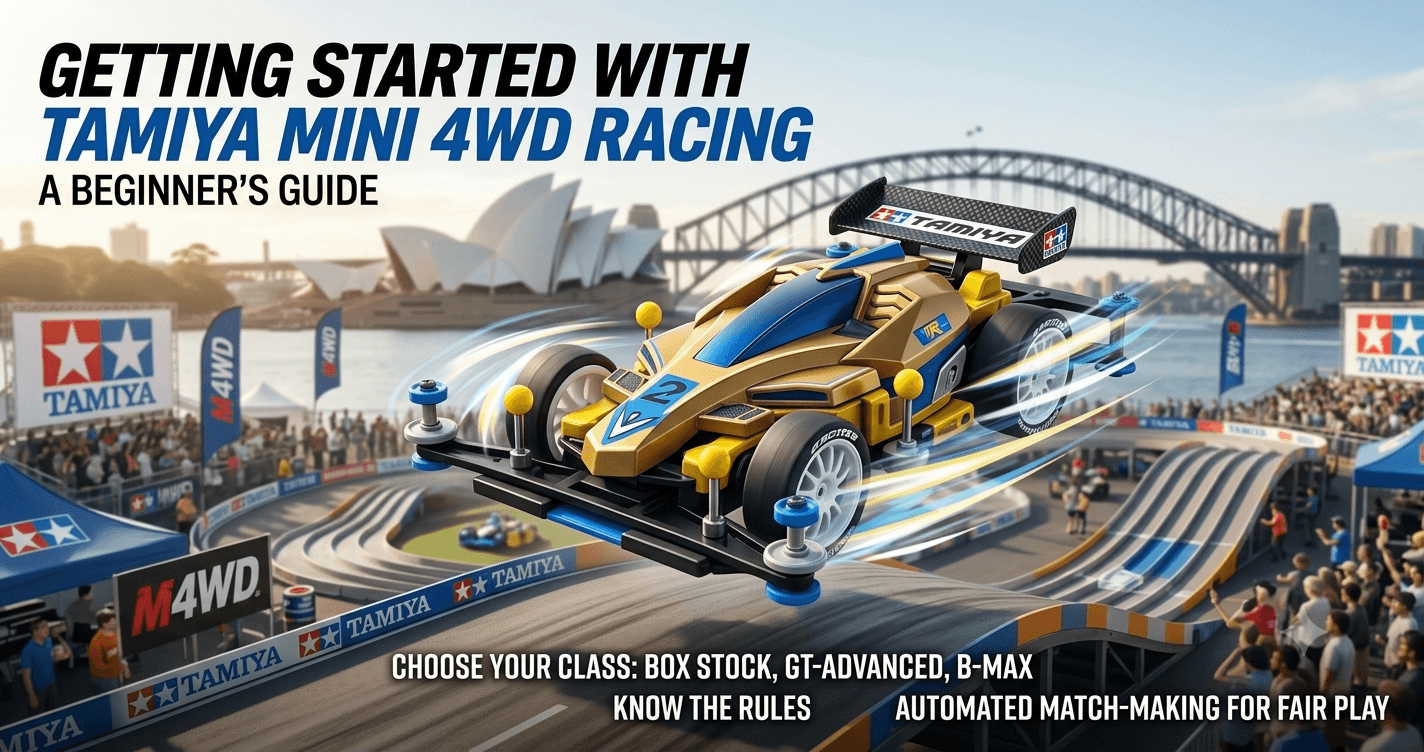
Getting Started with Tamiya Mini 4WD Racing in Sydney
Ready to race Tamiya Mini 4WD in Sydney? Learn how to choose your class (Box Stock, GT-Advanced, B-Max), check in on race day, and compete in annual series.
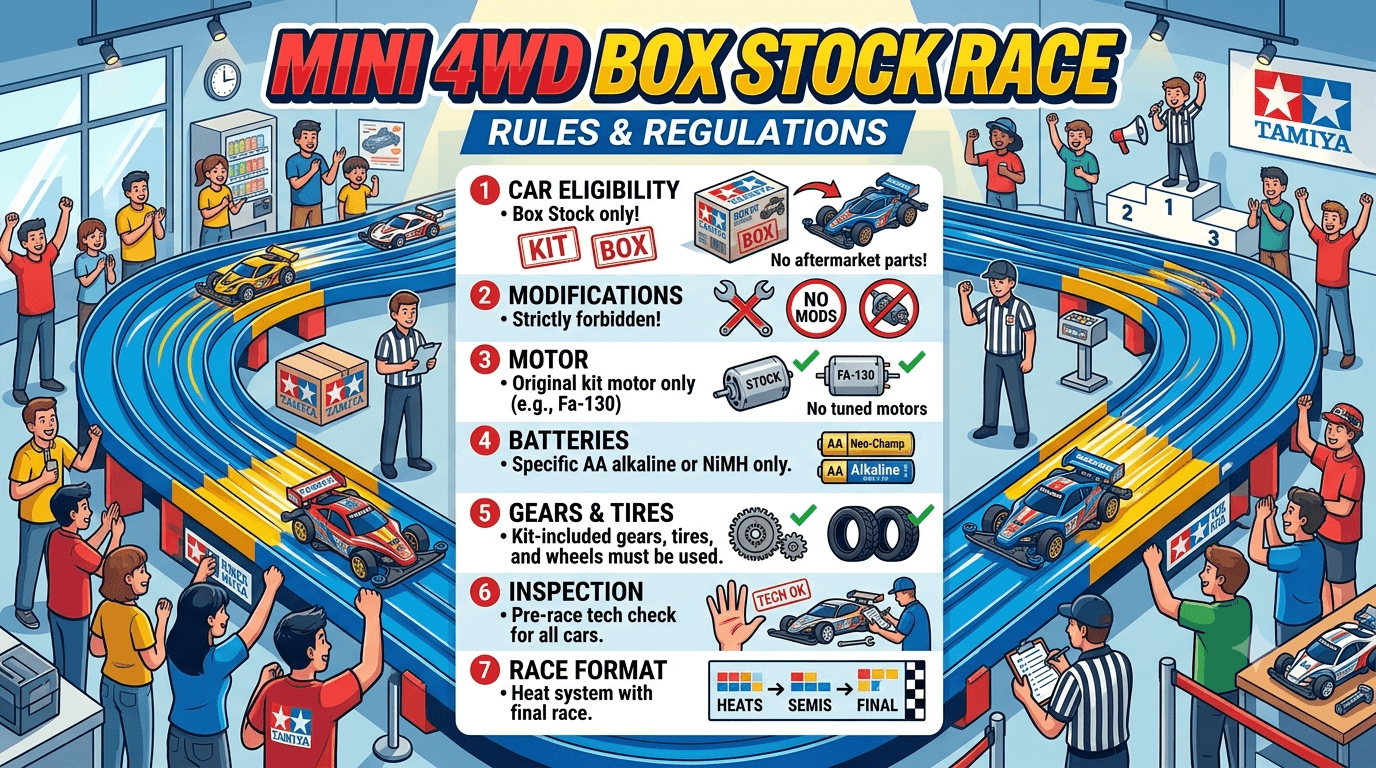
Box Stock Class: Rules & Regulations
View the strict rules for the Box Stock Class. Learn about genuine Tamiya kit requirements, stock motor regulations (Type 130), and our no-modification policy. Ensure your build is race-legal for the next Sydney event!