
Step Into High-Speed Tuning: A Guide to B-Max Mini 4WD Racing
Published
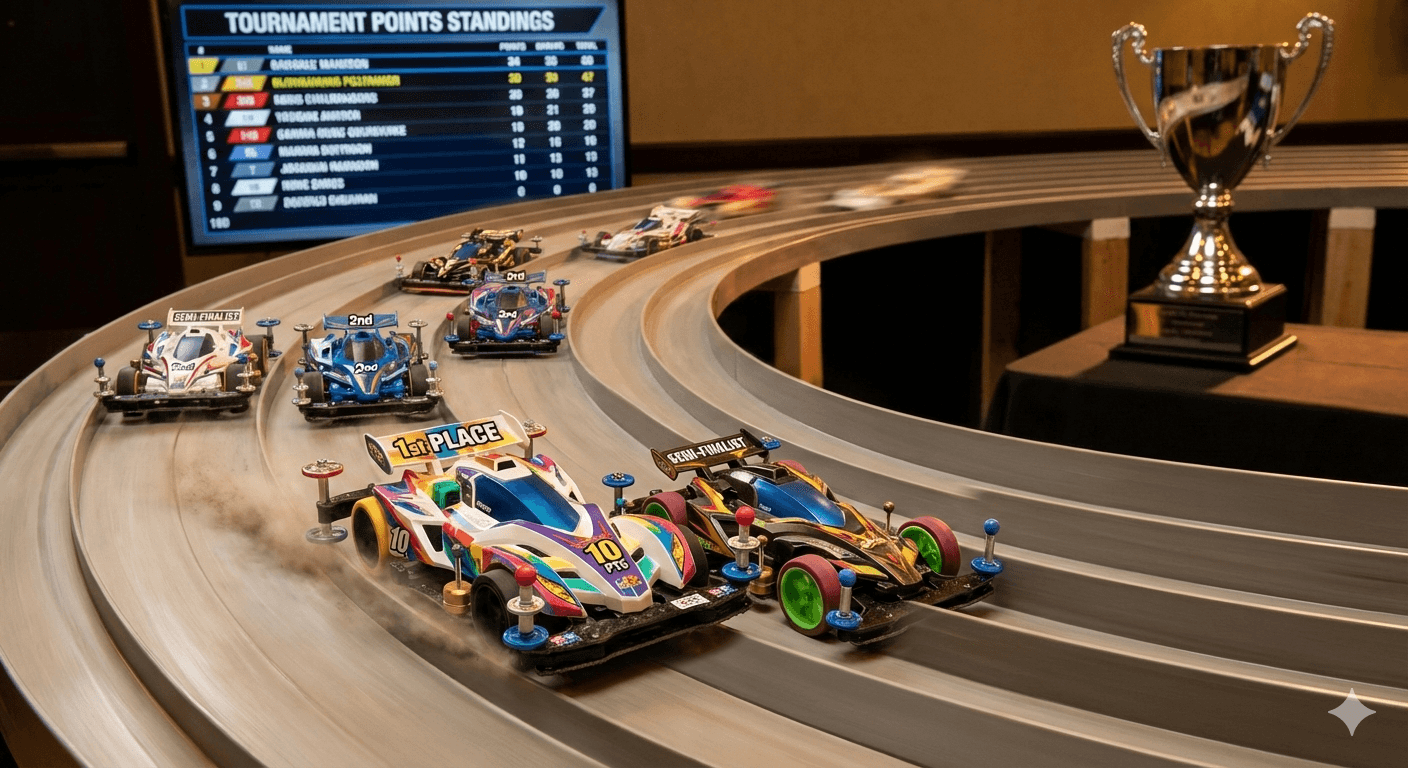
If you’re looking for high speeds, aggressive motor options, and total tuning freedom without taking a saw or dremel to your chassis, B-Max (Basic-Max) is where the real speed lives.
B-Max is designed as a "no-cut" class. You get to use carbon fiber plates, high-grade ball bearings, and unrestricted motor choices, but everything must be built strictly using bolt-on methods.
Here is a practical guide on how to approach your first B-Max build and dial in a fast, reliable setup.
1. What Makes B-Max Unique?
Unlike Box Stock or GT-Advanced, B-Max lifts almost all component restrictions while keeping a strict rule against modifying parts structurally:
No Motor Limit: Open motor choices mean you can step up to Mach Dash, Hyper Dash, or Sprint Dash motors.
Carbon & Bearings Allowed: High-Grade (HG) carbon plates, aluminum rollers, and precision ball bearings on axles and counter gears are fully legal.
Any Cowl/Body: You can run any Tamiya cowl or clear polycarbonate body, provided it is properly mounted with standard body catches.
The "No-Cut" Rule: No cutting, shaving, or hollowing out chassis, plates, or bodies to clear space or create dynamic gimmicks (e.g., no Chochin/Lanterns or AT-Bumper pivots).
2. Favored Chassis Platforms
Choosing the right base chassis is critical in B-Max because you cannot cut or alter the plastic to change its natural weight distribution or rigidity:
FM-A (Front Midship Aero): The undisputed community favorite for B-Max. Its front-motor layout puts weight directly over the front tires, pulling the car straight over jump ramps and naturally preventing nose-up flips upon landing.
ME / MA / MS: Direct-drive mid-motor chassis known for incredible power transfer efficiency and low center of gravity. They are exceptionally stable in high-speed corners and land tabletop jumps with minimal bounce.
Carbon Super FM (SFM): A classic front-motor chassis that remains a secret weapon in B-Max. The carbon-reinforced plastic gives it immense structural rigidity without needing heavy bracing, offering high speed through technical sections for racers who prefer vintage FM setups.
3. Drivetrain & Motor Setup
With open motor options, B-Max cars reach significantly higher speeds than other classes. Managing that power starts with an efficient drivetrain.
Ball Bearings Everywhere: Upgrade your wheel axles and counter gear with 620 or 520 ball bearings. Ensure they are cleaned of factory grease and lightly lubricated with high-speed bearing oil to minimize friction.
Motor Selection:
Hyper Dash / Power Dash (current meta): Great for technical tracks with frequent jumps and tight corners.
Mach Dash / Sprint Dash: Best for long straights and sweeping turns, but requires precise brake management to avoid flying off the track.
4. Plate Layouts & Carbon Stays
Because you cannot cut carbon plates to make custom bumpers, building a rigid, wide chassis structure using stock HG carbon stays is critical.
Maximizing Width: Use front and rear HG carbon stays to set your rollers as close to the 105mm maximum width limit as possible for high-speed corner stability.
Multi-Roller Stacks: Aluminum double rollers on the front and stacked 19mm lightweight aluminum rollers on the rear are popular setups to keep the car tracking straight through lane changers.
Underguards: Mount FRP or carbon plates underneath the front and rear of your chassis to act as skid plates and mounting surfaces for brake sponge.
5. Taming Speed: Dampers, Brakes & Battery Strategy
High speed means hard landings off tabletop jumps. Since dynamic suspension gimmicks aren't permitted, stability comes down to static mass damper positioning, brake setup, and power management.
Battery Voltage Strategy per Heat: Because Dash motors draw heavy current, managing your battery voltage between heats is essential. Running at full 1.50V+ peak charge might give you explosive speed, but it can cause you to over-jump technical sections. Managing different sets of batteries discharged to specific voltages (e.g., 1.30V–1.42V for technical layouts vs. fresh 1.48V+ for fast tracks) lets you fine-tune your pace heat-by-heat without altering your brake setup.
Mass Damper Placement: Position heavy mass dampers (such as bowl or cylinder weights) on long screws along the side stays and rear stay. Adding rubber piping on top of the screws keeps the weights from bouncing off while absorbing impact energy upon landing.
Brake Tuning:
Front Brake: Use light (blue) brake sponge on the front underskirt to keep the car's nose down off jumps.
Rear Brake: Use stronger (pink) brake sponge on the rear stay to scrub speed just before taking flight, ensuring the car lands flat in the track lane.
Ready to unleash full speed on track? Pick an FM-A, MS/MA, or Carbon SFM platform, bolt on your carbon stays, drop in a Dash motor, manage your voltages, and get ready for B-Max!
Getting Started with Tamiya Mini 4WD Racing in Sydney
Ready to race Tamiya Mini 4WD in Sydney? Learn how to choose your class (Box Stock, GT-Advanced, B-Max), check in on race day, and compete in annual series.
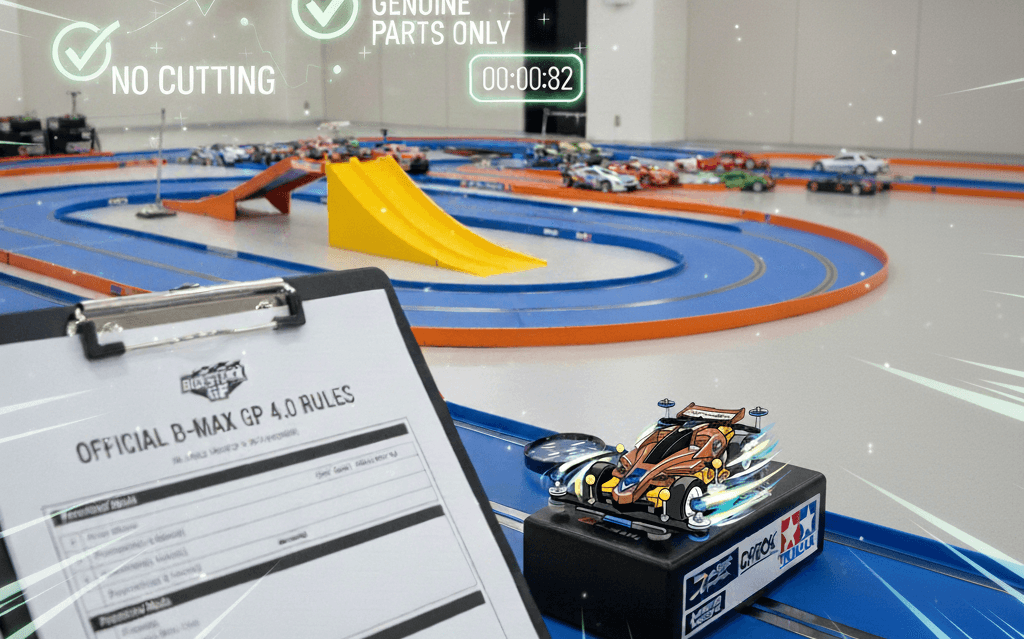
B-MAX GP / Stock Class Sydney Racing Rules
Building a race-legal Tamiya car? Check the official B-MAX 4.0s & Stock Class dimensions, chassis, and body rules for our premier Sydney race events.