
GT-Advanced Mini 4WD Building Guide: Tuning, FRP & Drivetrain
Published
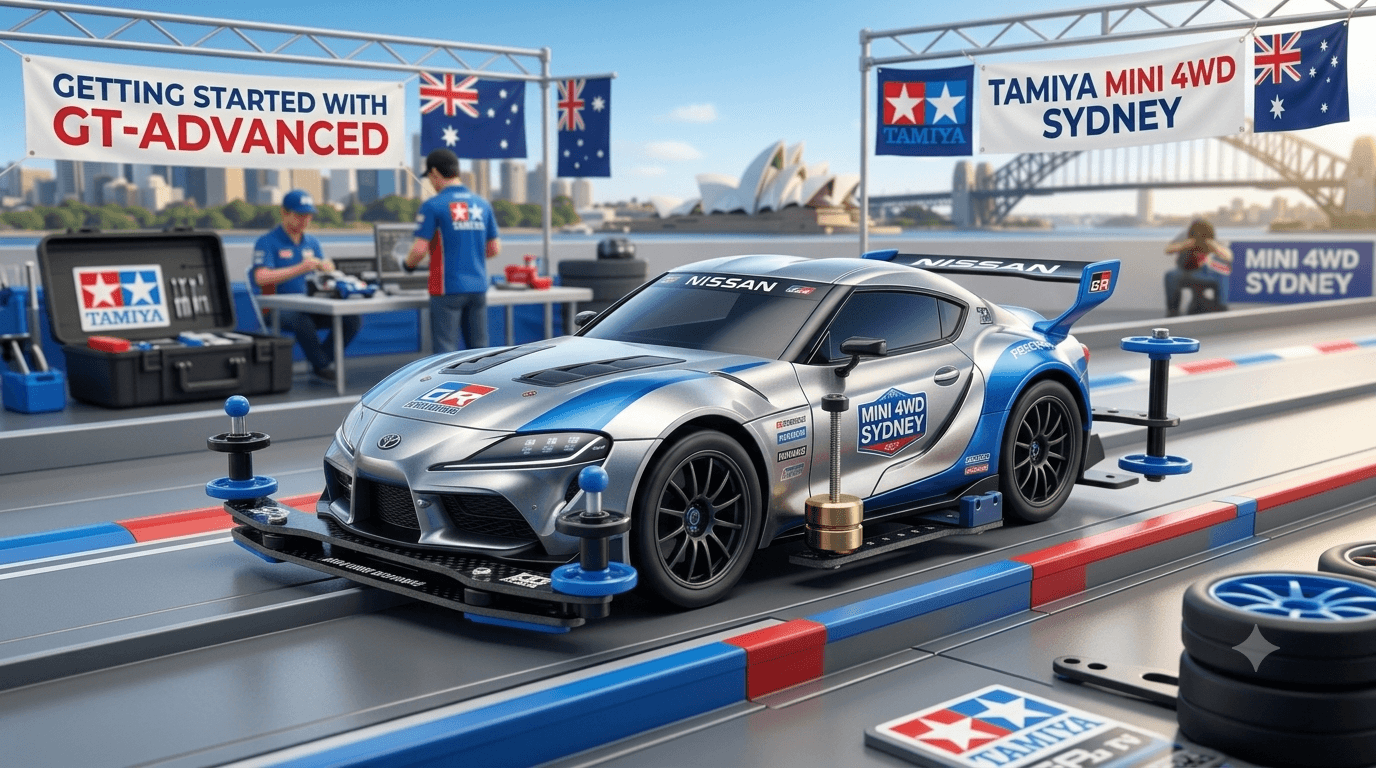
Step Up Your Game: A Practical Guide to Building a Winning GT-Advanced Car
If you've spent time mastering Box Stock, you know the thrill of close racing. But if you're ready for more speed, cleaner looks, and actual chassis tuning without spending hundreds on carbon plates or cutting up chassis, GT-Advanced is your natural next step.
Instead of repeating the official rulebook line-by-line (you can check out the full Official GT-Advanced Class Regulations anytime), this guide focuses on how to actually approach building and tuning a fast, stable GT-Advanced machine.
1. Choosing Your Base & Cowl
GT-Advanced is built around a realistic "scale sports car" aesthetic, which means you get to race sleek, realistic bodies instead of the usual open-wheel buggies.
Polycarbonate vs. ABS Plastic: While standard ABS plastic bodies look fantastic when painted, clear polycarbonate (PET) cowls (like the clear GR Supra or Yaris WRC) offer a significant weight advantage and lower your center of gravity.
Chassis Pairing: Front-motor (FM-A) and mid-motor (MA/MS) chassis tend to offer great natural balance for jump landings. Rear-motor chassis like VZ or AR are blazingly fast in the straights but require slightly tighter damper tuning.
Pro Tip: Remember to keep your body catches tight and secure. Under GT rules, if your shell pops off on track, your run is instantly over!
You can also just get the Rowdy Bull or Aero Avante Starter Pack and you are ready to go since both bodies are allowed under gt advanced rules.
2. Navigating the Bolt-On Tuning Philosophy
GT-Advanced follows a "pon-tsuke" (bolt-on only) philosophy. You aren't allowed to cut chassis or craft custom carbon gimmicks, so your performance comes down to how smartly you stack and arrange standard FRP plates.
Essential Plate Layouts
Front Stays: Use a wide front FRP stay to push your rollers out to the maximum legal width (105mm). Wider roller placement gives you much better stability through high-speed corners.
Rear Stays: A double-plate setup on the rear provides rigid mounting points for both your upper/lower rollers and your brake stay underneath.
Countersinking: You are allowed to countersink your screw holes on bottom plates. Doing this lets flathead screws sit completely flush, preventing your screw heads from catching on track lane changers or failing the 1.0mm ground clearance check.
3. Mastering the Bearing Ban (Maximizing Drivetrain Efficiency)
Because metal ball bearings are strictly banned in this class, drivetrain friction is your biggest enemy. A poorly lubricated plastic bushing will eat up your motor's power before it even reaches the wheels.
POM Low-Friction Bushings: Ditch standard metal eyelets where possible and upgrade to low-friction POM plastic bearings for your wheel axles and counter gear.
The Lube Strategy: Use a very light synthetic oil or low-viscosity bearing lube on your POM bushings rather than heavy grease. Thick grease creates drag, while light oil lets the axles spin freely.
Axle Straightness & Hex Indexing: Just like in Box Stock, make sure your 60mm shafts are perfectly straight and index your wheels to eliminate any wobble.
4. Taming the Light Dash Motor
With the motor pool capped at the Light Dash Motor (and its PRO equivalent), you'll have plenty of power on track. However, because you can't use complex dynamic dampers (like Chochin/Lanterns or Catcher Dampers), keeping all that speed glued to the track takes smart static tuning.
Stock, torque tuned, rev tuned and atomic tuned motors are also allowed.
Mass Damper Placement
Stick to standard vertical-travel mass dampers riding on fixed, smooth screws.
Place heavier slim dampers as close to the outer edges or front/rear stays as possible to leverage maximum stabilizing force when landing off tabletop jumps.
Add small rubber pipe bits or locknuts on top of your damper screws so the weights don't bounce completely off the shaft during hard hits.
Brake Tuning
Use Tamiya brake sponge strips (blue or pink) on your front and rear underskirts to control how your car enters lane changers and jump ramps.
A light front brake prevents the nose from launching too high, while a rear brake helps slow the car down just enough before taking flight.
Ready to Build?
GT-Advanced is one of the most rewarding classes in Sydney because it rewards clean building, smart part selection, and precise maintenance over raw budget.
Grab an approved GT kit, bolt on your FRP stays, prep those POM bushings, and we'll see you at the inspection table!
Getting Started with Tamiya Mini 4WD Racing in Sydney
Ready to race Tamiya Mini 4WD in Sydney? Learn how to choose your class (Box Stock, GT-Advanced, B-Max), check in on race day, and compete in annual series.
.png&w=3840&q=100)
Mini 4WD Tournament Regulations: GT Advanced Class
Scale GT racing rules for Sydney & Australian Mini 4WD clubs. Review the strict approved production car body list, FRP restrictions, and plastic roller laws.